How to introduce new foods to picky eaters without battling at the table
The short answer is repetition without pressure. Kids may need to see, smell, or touch a new food fifteen to twenty times before they're willing to taste it — and the parent's job is to keep offering, not to force.
Why kids reject new foods
Food neophobia — the rejection of new foods — peaks between ages two and six. It's developmental, not personal. From an evolutionary standpoint, it's a survival mechanism: toddlers learning to walk shouldn't be eating strange berries. The brain learns to label unfamiliar foods as "no" first, and parents shift it to "okay" through patient, low-pressure exposure.
What works
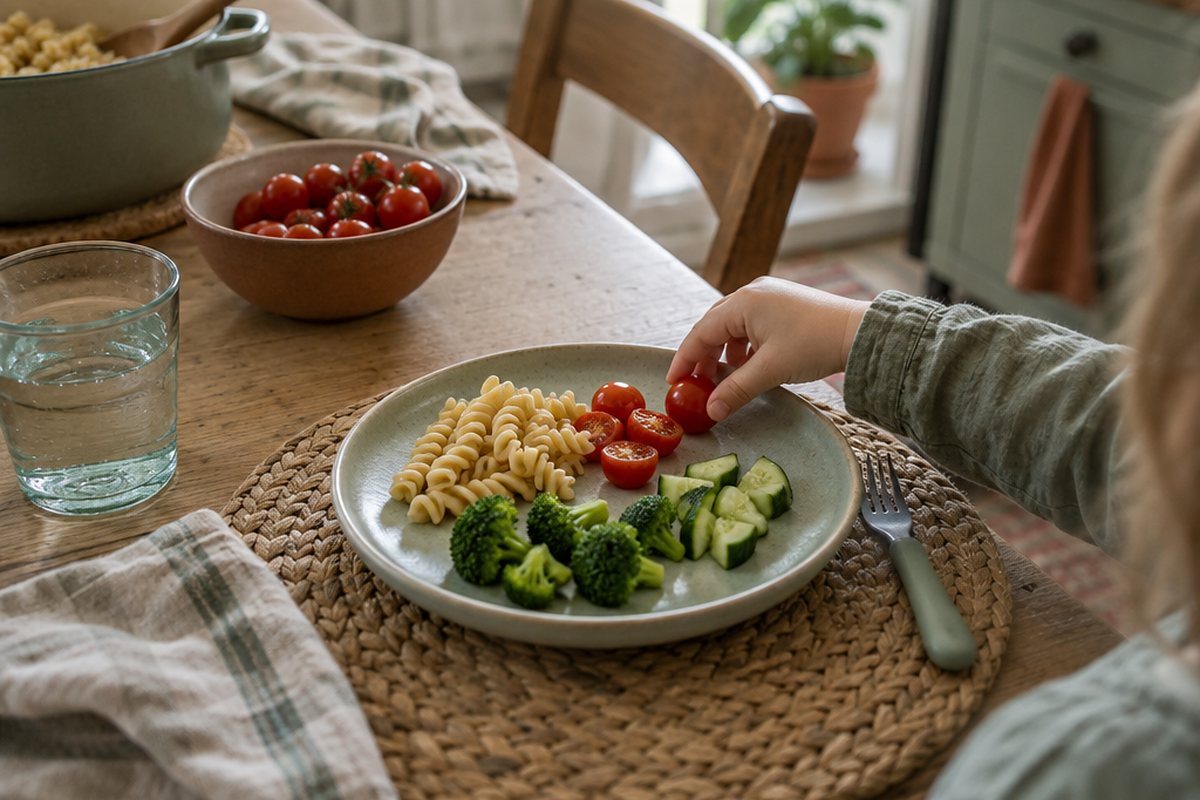
Serve new foods alongside familiar ones. A new vegetable next to pasta they already love removes the all-or-nothing stakes.
Let them touch it, smell it, push it around. Sensory exploration is the first step toward eating. A child who plays with a cherry tomato today might bite one next week.
Eat it yourself, casually, without comment. Modelling without commentary works far better than encouragement. "Mmm, isn't this nice?" reads as pressure.
Cook with them. Kids who help peel, stir, or arrange food are more likely to try it. Even setting the table builds buy-in.
Stay calm when they refuse. No comment, no negotiation, no replacement meal. The food was offered. The next meal is in a few hours.
What doesn't work
- Hiding vegetables in sauces. They figure it out, and trust breaks.
- Dessert as reward. Trains kids to think sweet food is more valuable.
- Force-feeding. Builds aversion and damages mealtime trust.
- "One more bite." Pressure of any kind extends the refusal phase.
- Negotiation. Once you start, every meal becomes a transaction.
A two-week gentle plan
Pick one new food per week. Serve it at three to four meals across the week, in different forms (raw, roasted, in a sauce). No comment. No pressure. By week two, repeat. Most kids start with a touch, move to a lick, then a nibble, then a few bites. The timeline is the child's.
Frequently asked questions
How many times does a child need to try a new food?
Kids may need fifteen to twenty low-pressure exposures — seeing, smelling, touching — before they willingly taste something new. Keep offering the food casually alongside familiar favourites, without commentary or negotiation, and let the timeline be the child's own.
Should you hide vegetables in your child's food?
No. Kids usually figure it out, and the discovery breaks trust at the table. Open, repeated, pressure-free exposure — served next to foods they already love — works better long-term than hiding vegetables, rewarding with dessert, or one-more-bite bargaining.
What is food neophobia and when does it peak?
Food neophobia is the developmental rejection of unfamiliar foods. It peaks between ages two and six and is a normal survival mechanism, not defiance. Patient, calm exposure gradually shifts a new food from “no” to “okay” — pressure only extends the phase.
Where Tova helps
When you're planning a week of meals for a family with one picky eater, Tova builds the plan around recipes that pair familiar safe foods with one new exposure ingredient — so you can keep offering without making every dinner a stand-off.