School holiday meal planning: feeding everyone all day without blowing the budget
European school holidays — the autumn half-term, the Christmas break, the long summer stretch — all do the same quiet thing to a family food budget: they add two extra meals and a couple of extra snack rounds a day, every day, for however many weeks the kids are home. The dinner line barely moves. The daytime line does. Here is what actually changes, with real numbers, and three habits that keep it from creeping.
Why does feeding kids cost more during school holidays?
During term time, school covers lunch — and often a morning snack — for free, five days a week. On holiday, every one of those meals comes home: roughly three meals and two snack rounds a day, seven days a week, per child. Food itself does not get more expensive; you are simply buying and cooking a lot more of it.
Two school-age kids at home effectively adds ten lunches and ten snack rounds to the week that used to happen somewhere else. That is the part most weekly budgets miss, because the normal shop is built around dinner, not an all-day kitchen.
How much extra should I budget for groceries during school holidays?
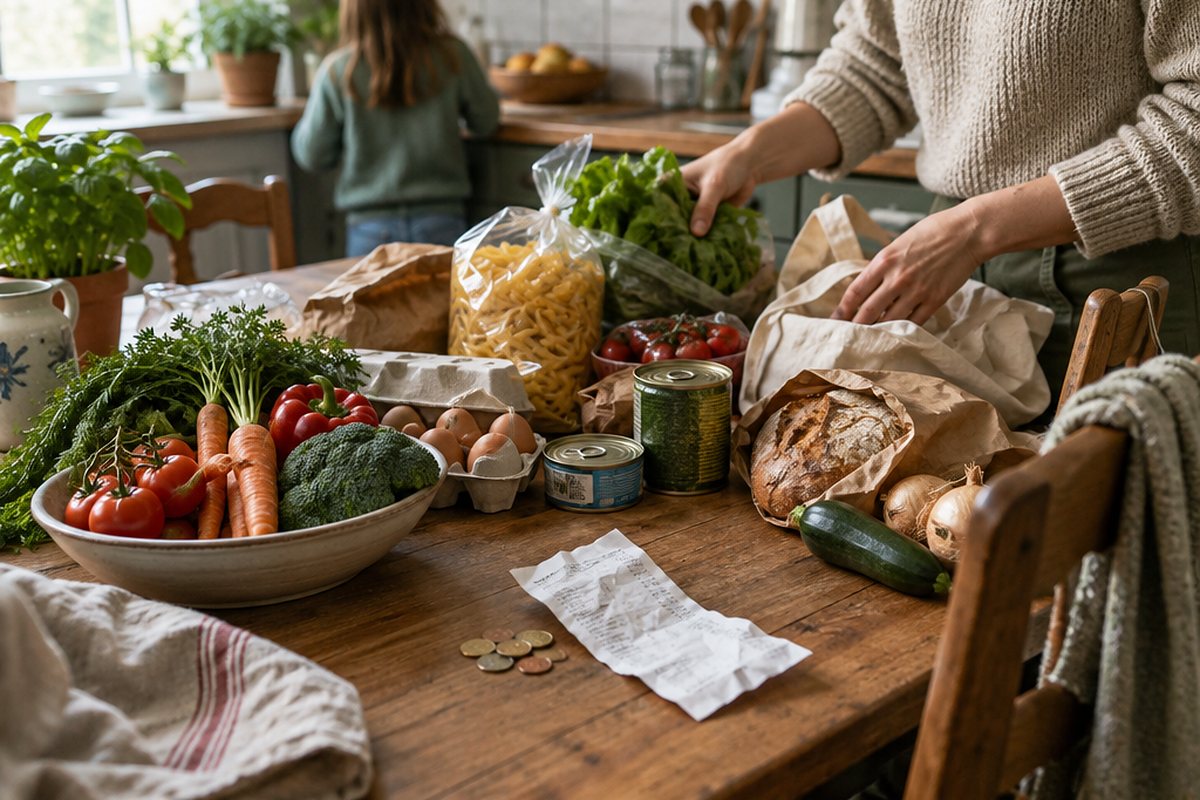
Plan for an extra €25–€40 a week per child on top of your normal shop, mostly in lunch and snack items rather than dinner, which changes little. For a family of four already spending roughly €150–€180 a week at a discounter like Lidl or Aldi, a holiday week tends to land closer to €200–€230 once the extra lunches are in the trolley.
The jump is bigger with younger kids home all day — more snacks, less independent cooking — and smaller once children are old enough to build their own lunch from the pantry. Carbohydrate-heavy lunches — pasta, rice, bread, potatoes — stay the cheapest way to fill a hungry ten-year-old, well before protein or branded snack items do.
What can you actually feed everyone for lunch every day during the holidays?
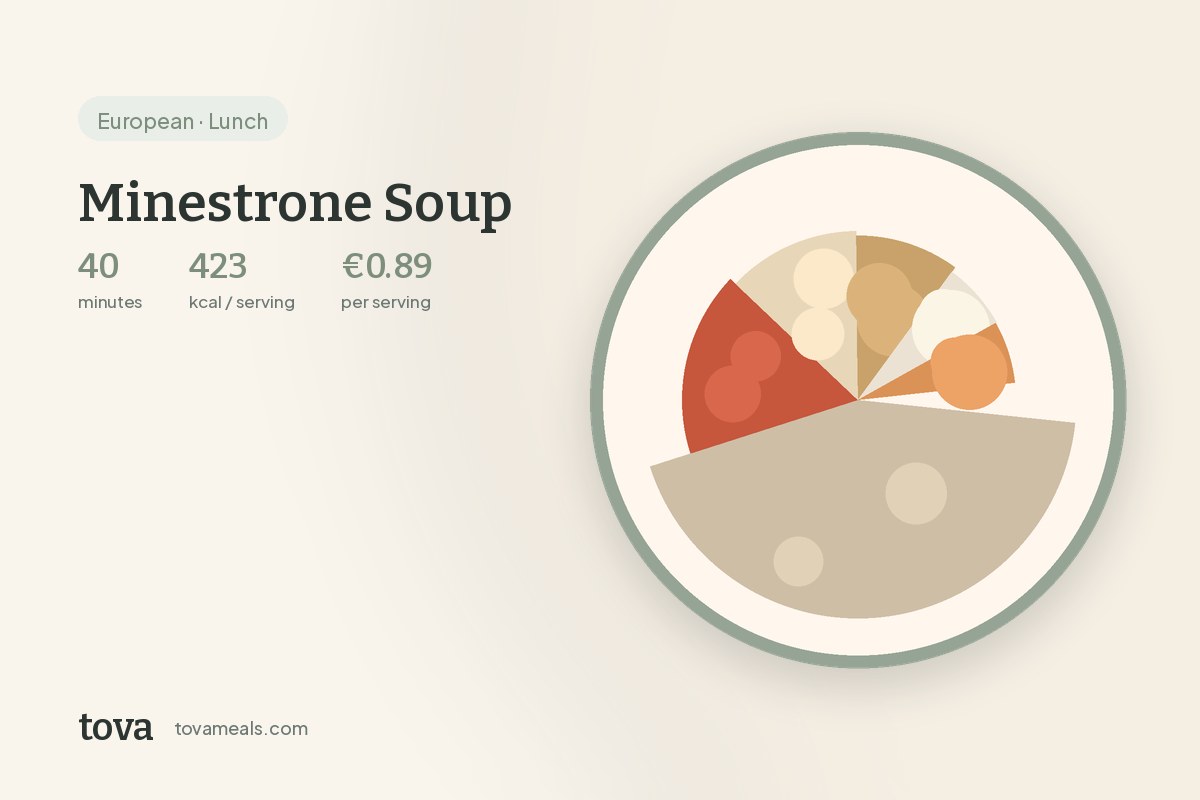
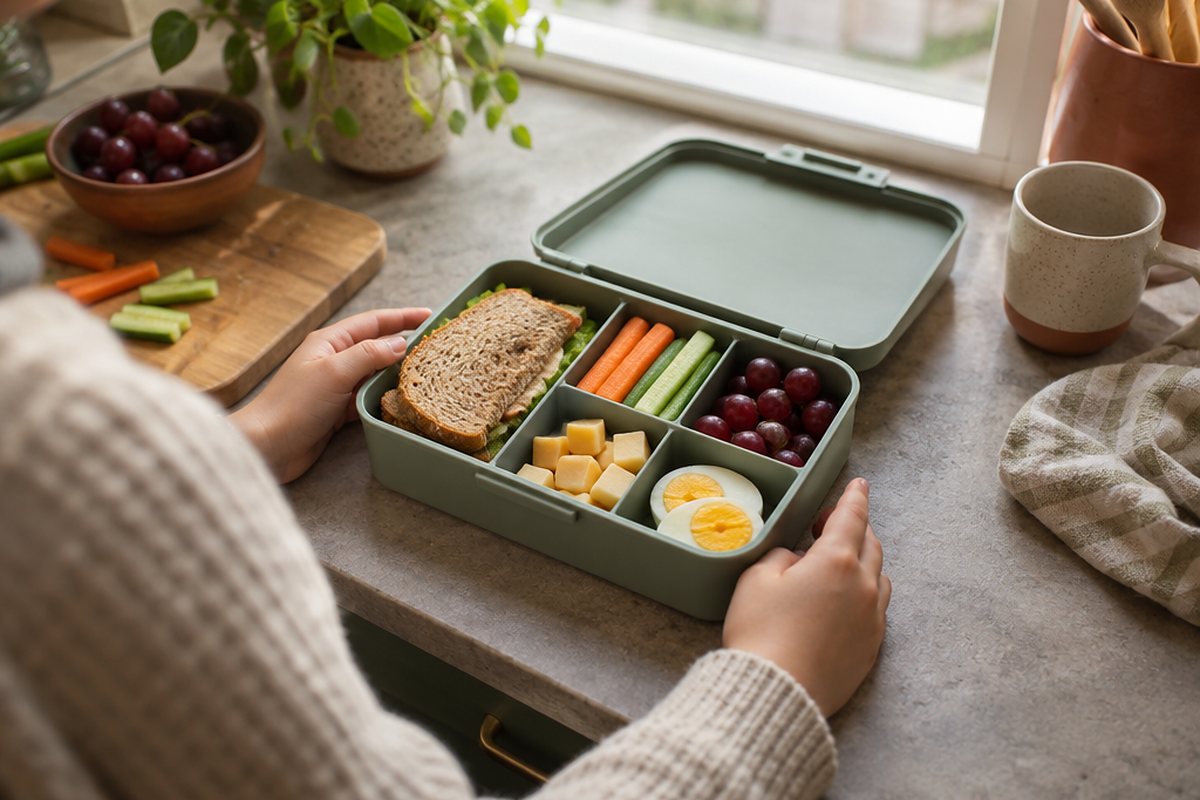
1. Soup and bread — a pot of vegetable or lentil soup made on the first day covers lunch three times that week, reheated. 2. Loaded toast — beans, egg, or leftover roast vegetables on toast, ready in five minutes. 3. Wrap bar — put out tortillas, one protein, and whatever vegetables are in the fridge, and let everyone build their own. 4. Pasta salad — one big bowl made once, eaten cold over two or three days. 5. Leftover remix — last night's dinner, repurposed: roast chicken becomes a wrap filling, extra rice becomes fried rice.
None of these need a recipe so much as a habit — picking two or three that this particular household will actually eat, and keeping the ingredients for them in stock for the whole holiday rather than buying lunch items day by day.
How do you stop snacking from wrecking the grocery budget?
Set a fixed snack shelf or box at the start of the week rather than restocking on demand — once it is empty, the next snack is fruit, bread, or whatever is already in the pantry, not a shop run. Buying snacks once, in bulk, rather than little and often, is usually the single biggest saving in a holiday week.
A Carrefour or Albert Heijn multipack of something simple — crackers, a tub of yoghurt, a bag of apples — divided into a box at the start of the week costs noticeably less per portion than the same items bought as single-serve snacks through the week. It also removes the twice-a-day "can I have a snack" negotiation.
Should the weekly meal plan change during school holidays?
Only the daytime half of it. Dinner planning barely needs to change — keep the usual rotation. What is worth adding for a holiday week is a short lunch-and-snack list written once at the start of the week, alongside the dinner plan, rather than decided meal by meal as the week goes.
Frequently asked questions
Do I need to cook three separate meals a day during the holidays? No — one meal built around a fridge-clearing wrap, soup, or sandwich, plus a proper dinner, covers most days. Cooking three meals from scratch every day during a holiday week burns out the person doing it faster than it helps the budget; a lunch batch-cooked once and reheated over two or three days works just as well.
Is a holiday camp with meals included cheaper than feeding kids at home? It depends entirely on the camp's own meal pricing, which varies widely across Belgium, the Netherlands and France. As a rough comparison, home lunches built from pantry staples usually come in under €2 a portion, so weigh that figure directly against whatever the camp quotes before assuming either option is cheaper.
What is the single biggest money-saver for school holiday meals? Buying snacks and lunch ingredients once at the start of the week rather than topping up daily. One slightly bigger shop at a discounter, divided into a snack box and a short list of lunch builds, consistently costs less than the same items bought piecemeal across seven days of small top-up trips.
How Tova helps
Tova's 52 free family dinner recipes stay just as useful during the holidays — browse them at /recipes/ for dinner ideas that do not need to change just because the kids are home all day, each with the cost per serving worked out from average EU grocery prices up front. No account or email address needed to read any of them.