Autumn family dinners: cooking with what's in season
Autumn is the easiest season of the year to feed a family well. The markets and supermarket shelves fill up with squash, leeks, root vegetables, mushrooms and crisp apples — sturdy, filling ingredients that are grown close to home, keep for ages and turn into exactly the kind of warm, one-pot dinners everyone wants when the evenings get dark at six. Here is what to buy, how to plan a week around it, and how to get the children on board.
What vegetables and fruit are in season in autumn in Europe?
In October and November, look for pumpkin and butternut squash, leeks, carrots, parsnips, celeriac, beetroot, red cabbage, Brussels sprouts, kale, chicory, mushrooms and potatoes, plus apples and pears. These are the vegetables of a Northern European autumn: hardy, filling, good value, and at their best for flavour right now.
- Squash and pumpkin — soups, traybakes, risotto, mash.
- Leeks — pies, soups, stoemp, gratins.
- Root vegetables (carrots, parsnips, celeriac, beetroot) — roasting, mash, stews.
- Cabbages and sprouts — braised red cabbage, shredded into stir-fries, roasted sprouts.
- Mushrooms — risotto, pasta sauces, pies.
- Apples and pears — lunchboxes, crumbles, or sliced with cheese.
Why cook seasonally as a family?
Seasonal produce tastes better, costs less and lasts longer at home. Vegetables picked at their peak and grown nearby have more flavour, and when there is plenty of them, prices fall and promotions follow. It also narrows the choice for busy parents: plan around what is plentiful this month and the week mostly writes itself.
It is also a quiet way to bring variety into the week. Children who see the same five vegetables all year rarely get curious about a sixth; autumn hands you a whole new set to try.
How do you plan a week of autumn dinners?
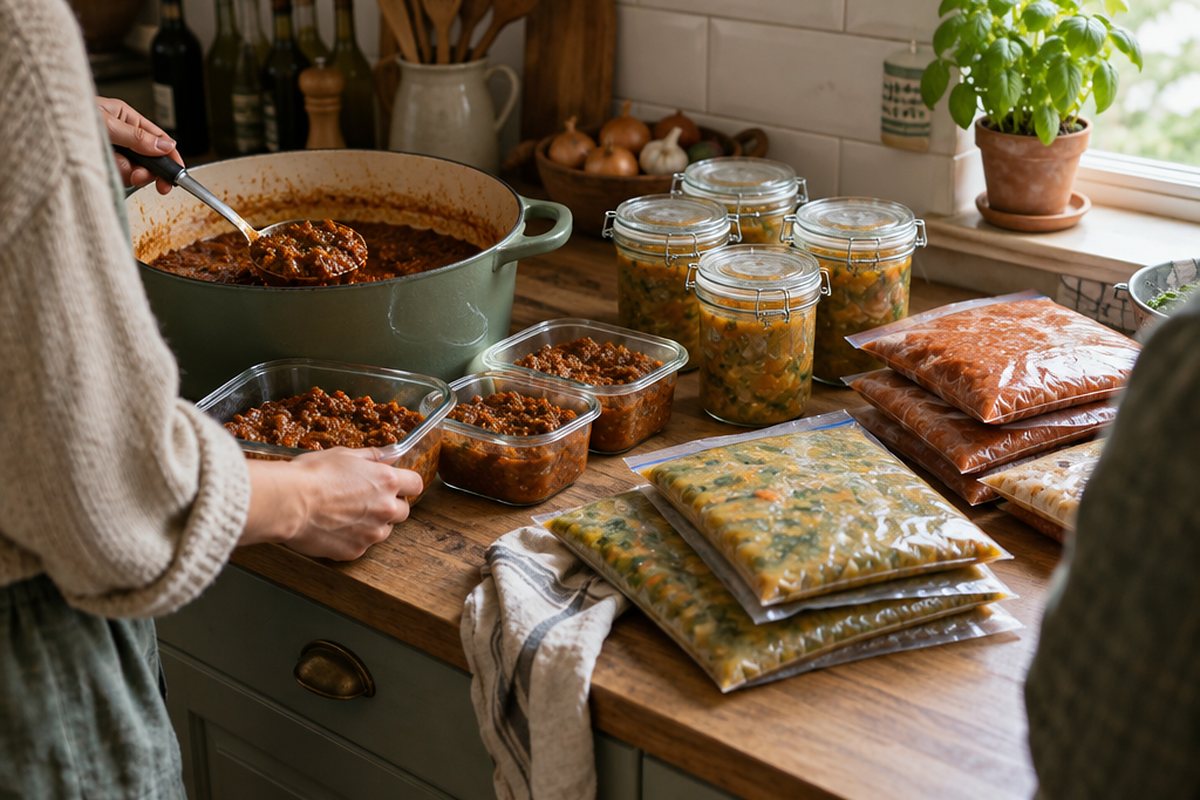
Start with two or three seasonal vegetables that are on promotion, then pick dinners that share them, so nothing is left over at the end of the week. Put the most perishable ingredients — mushrooms, kale — early in the week, and save squash, cabbage and roots, which keep well, for later. Cook one big batch at the weekend.
A week built on squash, leeks, roots and mushrooms might look like this:
- Monday: Mushroom risotto — mushrooms first, while they are freshest.
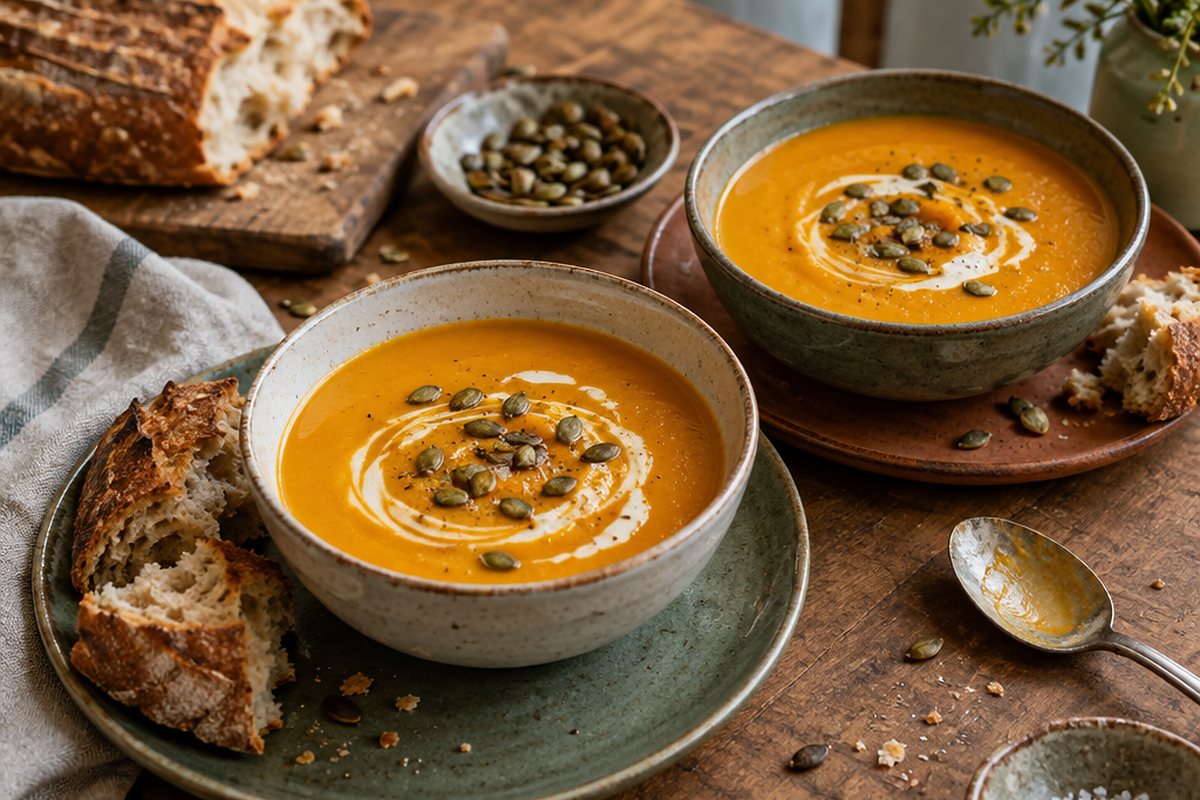
- Tuesday: Butternut and ginger soup with bread — make a double batch and freeze half.
- Wednesday: Creamy chicken and leek pie.
- Thursday: Cottage beef pie with root-veg mash — carrots, parsnips and celeriac in the topping.
- Friday: Stoemp with sausages — the leftover leeks and carrots go straight into the mash.
- Saturday: Flemish beef carbonnade — slow, low-effort, and even better the next day.
- Sunday: Minestrone — the end-of-week clear-out for any vegetables still in the drawer.
Five vegetables, seven dinners, one shopping trip. Swap any night for a family favourite — the point is that the vegetables overlap.
Which autumn vegetables do kids actually eat?
Squash, carrots, parsnips and sweet apples are the easiest wins, because roasting brings out their natural sweetness. Leeks and celeriac work best hidden — blended into a smooth soup or folded into mash. Sprouts and cabbage are harder sells: roast sprouts until crispy, or shred cabbage finely into fried rice or noodles.
- Roast first. A tray of squash and carrot wedges with a little oil and salt converts more children than any argument.
- Blend when in doubt. Soup is the friendliest way to meet a new vegetable.
- Let them help. Children who scoop squash seeds or wash mushrooms are far more likely to taste the result.
- One new thing at a time, next to something they already like.
How do you store autumn produce so it lasts?
Most autumn vegetables are built to keep. Store whole squash and pumpkins somewhere cool and dry, where they last for weeks; keep potatoes and onions in the dark but apart from each other; put leeks, carrots and cabbage in the fridge drawer; and keep mushrooms in a paper bag, not plastic, so they do not turn slimy.
Apples are best kept cold and away from other fruit and vegetables, because they release a gas that makes their neighbours ripen — and spoil — faster. Once a squash is cut, wrap it and use it within a few days, or roast and freeze the rest.
How Tova helps
Tova plans your family's week of dinners around what your household likes and what you already have in the cupboard, then writes the shopping list for you, leaving off what you already own. So the squash you bought on promotion actually ends up in Tuesday's soup instead of at the back of the vegetable drawer.
Frequently asked questions
What fruit and vegetables are in season in October in Belgium and the Netherlands? Pumpkin and butternut squash, leeks, carrots, parsnips, celeriac, beetroot, red and white cabbage, Brussels sprouts, kale, chicory, mushrooms, potatoes, apples and pears are all at their best. Most are grown locally, so they are fresher, keep longer at home and tend to be the vegetables supermarkets put on promotion.
Is seasonal food really cheaper? Usually, yes. When a crop is at peak harvest there is plenty of it, so prices drop and promotions follow — think big bags of carrots, squash and apples in autumn. Out-of-season produce is often imported or grown under glass, which costs more. Check the promotions first and build the week around them.
How do I get children to eat autumn vegetables? Roast them, blend them or mash them. Roasting turns squash, carrots and parsnips sweet and caramelised; blending hides leeks and celeriac in a smooth soup; mashing folds them into stoemp. Serve one familiar food next to the new one, let children help peel and stir, and keep offering without pressure.